
Table of Contents
Mumbai Pune Expressway: Route Map, Completion Date, Benefits & Real Estate Impacts
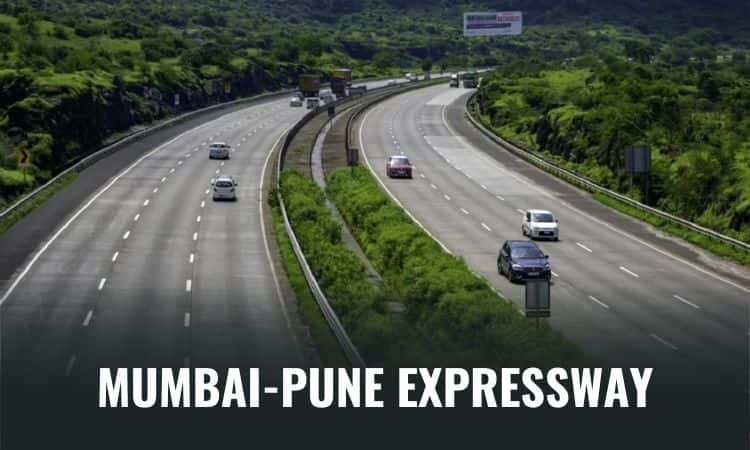
The Mumbai Pune Expressway, is also known as the Yashwantrao Chavan Expressway, this is India’s first six-lane, high-speed, concrete, access-controlled tolled expressway.
The Mumbai-Pune Expressway’s total length is approximately 94.5 kilometres (58.7 miles). It connects Mumbai, the bustling metropolis, with Pune, one of Maharashtra’s major cities.
This engineering marvel, which became fully operational in 2002, has significantly reduced travel time between the two cities from 4-5 hours to about 2-3 hours.
It begins at Kalamboli in Navi Mumbai and ends at Dehu Road near Pune. This project is meticulously designed with modern amenities, including service roads, pedestrian underpasses, and well-placed interchanges to ensure smooth traffic flow.
The Mumbai-Pune route passes through the scenic Sahyadri mountain ranges, offering picturesque views, especially near the Lonavala-Khandala stretch. This part of the expressway, with its winding turns and elevated paths, is particularly famous for its breathtaking landscapes and monsoon waterfalls.
The Mumbai-Pune highway has advanced surveillance systems, emergency telephones, and patrolling vehicles to provide immediate assistance. Additionally, strategically placed rest areas with facilities for refreshments and restrooms make it a convenient route for long-distance travellers.
This expressway has significantly boosted the economic interconnectivity between Mumbai and Pune, facilitating the swift movement of goods and people.
It has also spurred the development of satellite towns and commercial hubs along its route, contributing to the region’s rapid urbanization and industrial growth. This route has five major interchanges: Kusgaon, Kon (Shedung), Chowk, Khalapur, and Talegaon.
Despite its benefits, the Mumbai-Pune expressway route faces challenges like congestion during peak hours and holidays and the need for regular maintenance due to heavy usage.
Mumbai Pune Expressway: Quick Overview
Here is the Quick Overview of this Expressway
Particulars | Details |
Inaugural date | April 2002 |
Mumbai Pune Expressway Cost | 16,300 crores |
Starting Point | starts at Kalamboli in Navi Mumbai |
Ending Point | Kiwale in Pune |
No. Of Lanes | 6 lanes |
Mumbai Pune Expressway Length | 94.5 km |
Developed by | Maharashtra State Road Development Corporation |
Route Map of Mumbai Pune Expressway
This expressway is 94.5 km long, starting at Kalamboli (in Raigad district) in Navi Mumbai and finishing at Kiwale (in Pune). On this route, entry of two and three-wheelers like bullock carts and three-wheelers are prohibited.

History of Mumbai Pune Expressway
The Maharashtra Government appointed Rail India Technical and Economic Service (RITES) Limited in 1990 for the feasibility studies of the Mumbai Pune Expressway. After the survey, RITES submitted its reports in 1994 at an estimated cost of 11.46 billion to the government.
After this, the government gave the construction work to MSRDC (Maharashtra State Road Development Corporation Limited) in 1997 on the basis of a build-operate transfer, with permission to collect the tax for 30 years.
After all the paperwork and formalities, the construction of this expressway began on 1 January 1998. The construction cost of the Mumbai-Pune Expressway was approximately 16300 crores. The first was opened in 2000 and fully operational in 2002.
Also Read – Delhi-Dehradun Expressway
Tunnels at Mumbai Pune Expressway
This expressway route has six major tunnels covering a 5724m distance. Here are the major tunnels on this route:
Bhatan
Madap
Adoshi
Khandala
Kamshet-1
Kamshet-2
Construction Cost of Mumbai Pune Expressway
The construction cost of the Mumbai Pune Expressway is approximately ₹16,300 crore when it was completed in 2002.
Also Read – Jewar International Airport
Mumbai Pune Expressway Benefits
Benefits of the Pune-Mumbai
1. Reduced Travel Time: The major benefit of this project is it reduces travel time between Mumbai and Pune from 4-5 hours to just about 2-3 hours, making it more convenient for commuters and travellers.
2. Enhanced Safety: It offers safety measures like emergency telephones and regular patrolling. The expressway has improved safety standards compared to the old highway.
3. Economic Boost: The Mumbai Pune expressway has facilitated smoother and quicker transport of goods and services, boosting trade and commerce between Mumbai and Pune, which has contributed to economic growth in the region.
4. Tourism Development: The ease of travel has increased tourism in areas like Lonavala and Khandala, promoting local businesses and attractions.
5. Urbanization and Development: The expressway has spurred the development of satellite towns and commercial hubs, leading to rapid urbanization and industrial growth in areas like Navi Mumbai, Talegaon, and Kamshet.
Also Read – TOP 10 Biggest Mall in India
Features of the Mumbai Pune Expressway
The expressway features six lanes (three in each direction), ensuring a smooth and efficient traffic flow even during peak hours.
Built with high-quality concrete, the expressway is durable and requires less maintenance than traditional asphalt roads.
It is an access-controlled road, meaning entry and exit are managed through designated interchanges, enhancing safety and reducing congestion.
The expressway passes through the picturesque Sahyadri mountain ranges, offering stunning views, especially around the Lonavala-Khandala stretch.
This project has well-placed service areas providing fuel, food, and restrooms. These areas ensure that travellers have access to necessary amenities during their journey.
Mumbai Pune Expressway Speed Limits
Cars and Light Motor Vehicles: 80 km/h (some stretches allow up to 100 km/h)
Heavy Vehicles (Trucks and Buses): 80 km/h
Mumbai-Pune Expressway: Real Estate Impacts
1. Residential Real Estate
Mumbai Suburbs: The expressway has promoted residential growth in Panvel and Navi Mumbai, transforming them into bustling suburban areas with various housing options, from affordable apartments to luxury residences.
Pune Suburbs: The areas of Hinjewadi, Wakad, and Baner have witnessed major residential development due to their proximity to this expressway and major IT parks. This attracts professionals seeking convenient and quality living spaces.
2. Commercial Real Estate:
IT and Business Parks:
Pune: It plays a crucial role in the growth of Hinjewadi as a major IT hub in Pune, leading to an increase in demand for commercial spaces and, later on, boosting real estate prices.
Mumbai: Special Economic Zones in Navi Mumbai have attracted numerous businesses, leading to a growth in commercial real estate.
Logistics and Warehousing:
Strategic Location: The expressway’s strategic location has made it a prime area for logistics and warehousing facilities. Its proximity to Mumbai, Pune, and the JNPT port has increased the attractiveness for logistics companies, driving up demand for industrial real estate.
3. Tourism and Hospitality:
Lonavala and Khandala: The Mumbai-Pune Expressway is crucial in increasing tourism in Lonavala and Khandala hill stations due to improved accessibility, leading to the development ofhotels, resorts, and vacation homes.
Resort Development: Numerous resorts and weekend getaways have been developed along the expressway, catering to tourists from both cities looking for short breaks.
4. Infrastructure Development:
Connectivity: Enhanced connectivity has improved infrastructure, including better road networks, public transport, and amenities, further increasing the attractiveness of areas along the expressway for residential and commercial purposes.
5. Economic Impact
Job Creation: The growth in IT parks, SEZs, and industrial zones has led to job creation, attracting a workforce that further fuels demand for housing and commercial spaces.
Property Value Appreciation: The prices of residential and commercial projects are rapidly increased along the expressway due to increased demand and development, offering attractive returns on investment for property owners and investors.
Mumbai Pune Expressway: Toll Rate 2024
Vehicle type | Toll Price (₹) |
Cars | 320 |
Mini buses | 495 |
Heavy-axle vehicles | 685 |
Buses | 940 |
Large trucks | 1,630-2,165 |
What is missing link in Mumbai Pune Expressway?
The “Missing Link” is an 8-lane access-controlled highway under construction that aims to reduce the distance by 6km. MSRDC approved this project in 2017, and it is expected to be completed by January 2025.
This “Missing Link” consists of tunnels, viaducts, and bridges. It will bypass the Khandala Ghat, where several landslides occur. After constructing the Mumbai-Pune Expressway’s “Missing Link,” travellers on this route will experience major relief.
This project consists of two cable-stayed bridges, culverts, one small bridge, two twin tunnels (1.75 km & 8.92 km), and other infrastructure.
Cost: 6695.36 crore
Total Length: 13 km
Missing Link Status: under-Construction
Opening Date: 2025
Owner: MSRDC (Maharashtra State Road Development Authority)
Total Lane: 8 lanes
Tunnel Width: 23.50m